Introducing the Advantages and Obstacles of Metal Spreading in Industrial Manufacturing
Metal casting plays a vital role in commercial manufacturing, supplying distinct advantages such as style flexibility and cost-efficiency. It likewise encounters considerable obstacles, particularly worrying ecological impacts and source administration. The equilibrium in between maximizing benefits and decreasing drawbacks is essential for lasting techniques. Exploring these dynamics reveals deeper understandings into the future of metal spreading and its progressing duty in production. What techniques will form this market moving on?
Overview of Metal Casting Processes
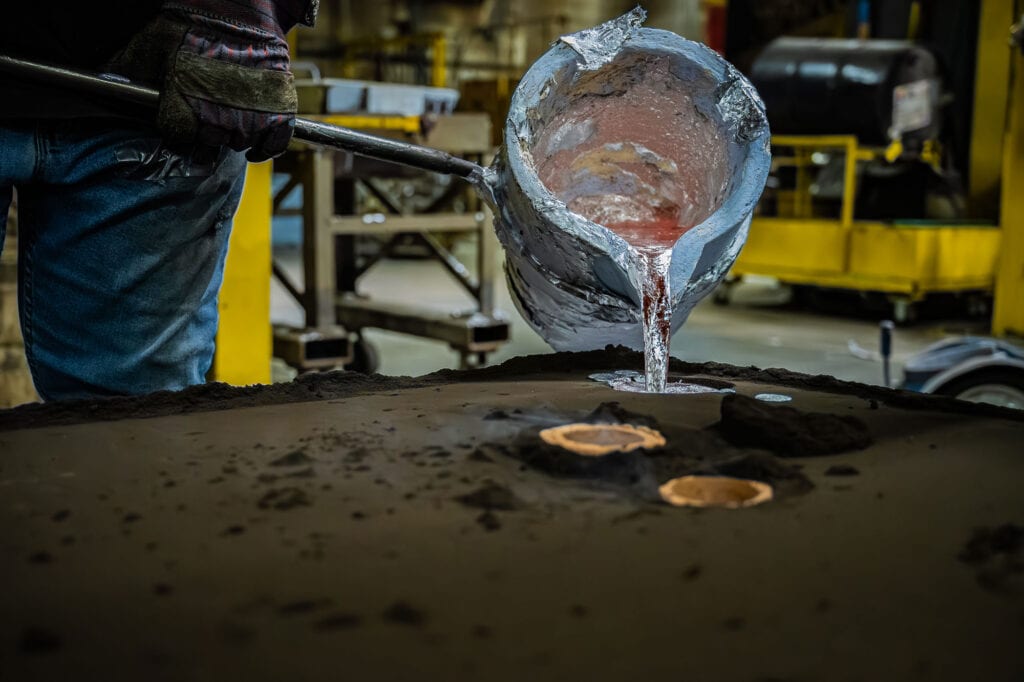
Steel casting functions as a basic process in industrial production, transforming liquified metal right into numerous forms and components. This technique encompasses several techniques, consisting of sand spreading, investment casting, and pass away spreading, each customized for specific applications. Sand spreading includes developing a mold and mildew from sand, which can be reused, making it cost-efficient for bigger manufacturing runs. Investment casting, recognized for its precision, uses wax patterns that are dissolved to create complex molds, ideal for intricate geometries. Pass away casting, on the various other hand, employs high-pressure shot of molten steel right into steel molds, making certain harmony and quick manufacturing rates. Each technique possesses one-of-a-kind attributes, affecting the option based on factors such as material manufacturing, intricacy, and kind quantity. Recognizing these procedures allows designers and makers to optimize designs and boost efficiency in the manufacturing of steel parts across various industries.
Benefits of Steel Casting in Manufacturing
While several making procedures exist, metal spreading sticks out due to its various advantages. One substantial advantage is its ability to produce complicated forms and elaborate designs with high precision, which is usually tough in other approaches. Metal spreading enables making use of a wide range of materials, consisting of non-ferrous and ferrous metals, enabling producers to select the very best product for particular applications. Furthermore, this procedure can fit large production runs, making it economical for mass manufacturing. The toughness of cast steel items adds to their long life and performance in different industrial applications. In addition, steel casting reduces material waste, as excess material can commonly be recycled in subsequent sets. Ultimately, the process is adaptable to numerous industrial markets, from auto to aerospace, making certain a broad applicability of cast parts. These benefits position metal spreading as an essential technique in contemporary manufacturing.
Style Adaptability and Customization
Metal casting provides significant design flexibility, enabling for the development of intricate geometries that fulfill details engineering requirements (Metal Casting). This adaptability expands to product option, making it possible for producers to tailor make-ups to improve efficiency attributes. As a result, steel spreading comes to be an important procedure in generating personalized elements for varied applications
Complex Geometries Attainable
Layout adaptability and personalization in steel casting permit the development of complicated geometries that would certainly be challenging or difficult to achieve via conventional production methods. This ability is specifically advantageous in markets calling for complex components, such as aerospace and vehicle. The casting process can fit different forms, including internal features and undercuts, which are usually hard to produce with machining. In addition, the capability to create huge parts in a single item lowers the requirement for assembly, enhancing architectural integrity and performance. The intricate styles made feasible by metal casting not only fulfill details useful demands but likewise make it possible for visual factors to consider, offering producers with the possibility to introduce and separate their items in an open market.
Customized Material Option
A diverse variety of products can be selected for steel casting, permitting manufacturers to customize their items to details efficiency demands and ecological problems. This flexibility boosts style capabilities, allowing the production of elements with customized homes. For example, alloys can be crafted to enhance stamina, corrosion resistance, or thermal security, depending on the designated application. By choosing materials that satisfy precise specifications, producers can maximize performance and longevity of their products. Additionally, this customized technique promotes the adaptation of layouts for different markets, from automotive to aerospace, making certain that each part does successfully under its special functional stressors. Eventually, tailored product option in steel spreading not only supports development but additionally drives competitive benefit in commercial production.
Ecological Obstacles in Metal Casting
The steel casting market faces substantial ecological challenges, particularly worrying exhaust control procedures, check this waste monitoring methods, and resource consumption issues. These aspects not just impact the ecological impact of manufacturing yet additionally influence regulative conformity and public perception. Addressing these obstacles is vital for cultivating sustainable methods within the sector.
Exhaust Control Actions
Metal spreading plays a critical function in industrial production, it likewise poses substantial ecological obstacles due to hazardous emissions produced throughout the procedure. To minimize these issues, different discharge control measures have been carried out. Advanced purification systems, such as baghouses and electrostatic precipitators, successfully capture particulate matter prior to it is released into the atmosphere. Additionally, the adoption of cleaner technologies, including induction melting and low-emission fuels, reduces the total carbon impact related to casting procedures. Normal tracking and conformity with environmental regulations further ensure that emissions remain within acceptable limits. By spending in these actions, sectors can decrease their ecological influence while keeping functional effectiveness and adhering to sustainability objectives.
Waste Administration Strategies
As steel spreading operations create substantial amounts of waste, reliable waste administration techniques are vital to resolve environmental difficulties. These approaches incorporate numerous strategies, including waste reduction, recycling, and accountable disposal. Carrying out cleaner production approaches can significantly reduce waste generation at the resource. In addition, reusing metal scrap and spin-offs can recover beneficial products, thus minimizing the ecological impact. Therapy and disposal of unsafe waste, such as factory sands and chemical residues, need stringent protocols to avoid soil and water contamination. In addition, worker training on waste management methods fosters a society of sustainability within the office. By embracing complete waste administration approaches, metal casting markets can minimize their environmental effect while enhancing operational performance.
Source Intake Issues
Making Certain Manufacturing Uniformity and High Quality
Ensuring production consistency and quality in metal spreading requires precise attention to information throughout the whole production procedure. Each phase, from mold design to material selection, plays an additional info essential role in accomplishing harmony in the final product. Precise measurements and exact casting methods aid minimize variants that might affect efficiency and integrity.
Quality assurance measures, consisting of normal inspections and screening, are vital to determine defects early in the production cycle. Implementing standardized processes and using innovative technologies can boost uniformity and reduce human mistake.
In addition, worker training and capability are important, as competent drivers are much better outfitted to deal with potential difficulties. Continual tracking of production parameters, such as temperature level and cooling prices, guarantees adherence to specifications.
Future Patterns in Steel Casting Modern Technology
Arising developments in steel casting modern technology are poised to transform the sector, boosting efficiency and accuracy. Innovations such as 3D printing for mold and mildew production permit rapid prototyping and complicated geometries that conventional approaches can not attain. Furthermore, the assimilation of artificial knowledge and artificial intelligence makes it possible for anticipating upkeep and boosted process optimization, reducing waste and power usage.
Sustainability patterns are likewise affecting the market, with an increasing focus on recycling products and utilizing eco-friendly methods. Advanced alloys are being created to enhance product properties, catering to specific market needs, such as light-weight elements for automotive applications. In addition, automation and robotics are streamlining procedures, minimizing human mistake and raising manufacturing rates.
Collectively, these patterns show a change in the direction of a more highly progressed, reliable, and eco aware metal spreading market, positioning it for significant development in the coming years.
Frequently Asked Questions

What Precaution Are Important During Metal Casting Processes?
Crucial safety steps throughout metal casting processes consist of correct personal safety equipment, adequate ventilation, rigorous adherence to safety protocols, normal tools maintenance, and comprehensive training for employees to reduce dangers and ensure a risk-free workplace.
Exactly How Does Steel Casting Effect Workforce Skills and Training?
Steel casting considerably influences workforce skills and training by requiring specialized understanding in metallurgy, safety and security methods, and devices operation. Constant improvements in innovation require recurring education, promoting a skilled labor force skilled at adapting to industry adjustments.
What Are the Typical Defects in Steel Spreading Products?
Typical problems in metal spreading products consist of porosity, shrinkage, misruns, cold shuts, and incorporations. These concerns arise from aspects like improper temperature level control, poor mold and mildew design, and contamination, impacting product high quality and performance.
Just How Does Metal Casting Contrast to Other Production Methods?
Metal casting supplies one-of-a-kind advantages such as complex shapes and material convenience, typically going beyond methods like machining in effectiveness. It may do not have accuracy contrasted to some sophisticated techniques, providing details difficulties in high quality control and production speed.
What Materials Are Commonly Made Use Of in Metal Spreading?
Usual products utilized in metal spreading consist of light weight aluminum, steel, iron, and bronze. Each material provides distinct residential properties suitable for numerous applications, influencing the spreading procedure and Visit Website the final item's stamina, sturdiness, and weight.
Steel spreading plays an essential function in industrial production, using distinct benefits such as design versatility and cost-efficiency. Metal casting offers as an essential procedure in industrial production, transforming liquified metal right into numerous shapes and parts. Metal spreading enables for the use of a wide variety of materials, including non-ferrous and ferrous steels, making it possible for producers to pick the finest product for specific applications. Steel spreading plays a critical duty in industrial production, it likewise poses considerable environmental difficulties due to hazardous exhausts generated throughout the procedure. Guaranteeing production consistency and high quality in metal spreading requires meticulous attention to detail throughout the whole production procedure.
Comments on “Metal Foundry Methods That Set the Standards of Modern Production”